In the past few years, if you have a focus on Korean dermatology, go to HAN medicine, Little Red Book or the Dcard discussion area, you should find a name very frequent:
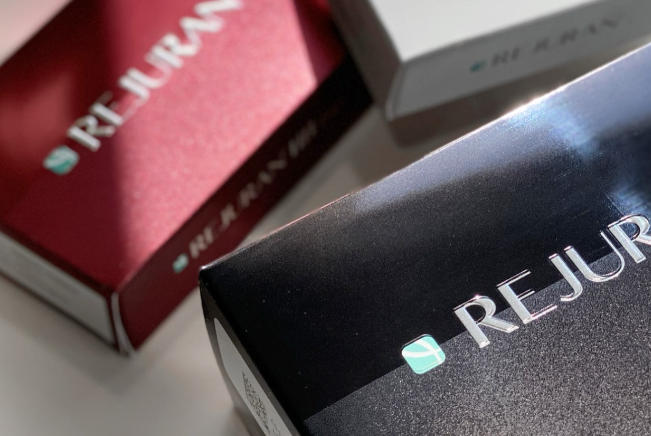
Rejuran.
In particular, many Korean girls refer to Ljuland when they share “why the skin is so bright”.
A number of Hong Kong-based consumers have the same questions when they first hear about the project:
What the hell is Lyolin? Why is Korean dermatology almost pushing? What difference does it make to a needle? Will it really improve the pores and skin?
In fact, it is not “filled medical beauty” in the traditional sense, but rather a skin repair and regeneration management.
And in these years, the trend towards health care in Korea has coincided with a shift from “obvious change” to “natural mother-sense skin”.
That's why it's getting hotter and hotter.
This article is a real skin management exercise that gives you a chance to understand what it is.
What's Rejuran?
The English name of Rejuran is:
Rejuran.
Its main core elements are:
PN (Polynucleotide) or PDF.
In short, It is a prosthetic component extracted from salmon DNA.
For the first time, many people would feel:
"Is salmon DNA safe in the face?"
In fact, the PN component has been widely used in Korean dermatology for many years, mainly for:
Help with skin repair and regeneration.
It's not the traditional concept of "stand up."
It's about slowly improving the skin.
So many doctors in Korea would call it:
"Face-type medical beauty."
Why are Korean girls so fond of Ljuland?
Because now the Korean aesthetic has changed.
What used to be popular was:
- Apparently, eyeslids.
- Up your nose.
- Fill full
But now South Korea emphasizes:
- Clean skin.
- Native sense.
- Kindergarten.
- Low presence for medical attention
In short:
No one can see what you've done. But you'll feel so good.
And that's exactly how it works.
It doesn't change the face suddenly. But it makes the skin slowly:
- More nuance
- More stable.
- More glamorous.
- More elastic.
So there are a lot of working girls in Korea. It'll be fixed to do the Liljulan maintenance.
What's the main effect of Ljuland?
1. Improvement of skin barriers
Many people now have skin problems. It's not just water.
They are:
The skin barrier was damaged.
In particular, for the long term:
- Stay up late.
- It's too beautiful.
- Sour
- A new season of sensitivity.
It makes the skin vulnerable.
It's one of the biggest features of Ljuland. It's the ability to repair.
A lot of people will find out after the fight:
Skin stability has increased.
The general red and sensitive situation will also improve.
2. Improving porosity
Korean girls value:
"near skin sense."
Because of the really high skin, Not only white.
They are:
Plumby.
It’s not just a “sliding” project, but it’s not a project. But because it improves the overall state of skin and its elasticity,
So a lot of people do it a few times. You'll find the pores are falling.
Especially with:
- The golden pin.
- Pico Thunder
- Waterlight management
The effect is usually more obvious.
3. Increased skin lightness Sensor.
A lot of people go to Korea and find out:
Korean girls have a “light feeling” in their skin.
It's not just makeup.
It's more stable at the bottom of the skin.
One of the most popular reasons for her being in Korea. This is what helps the skin:
- Water.
- Brightness.
- Glory.
This state of affairs is very important in the Korean aesthetics.
4. Improvement of fine and skin
With age, The adhesive protein will be slowly lost.
Many people start to appear:
- Line
- Dryprints
- Relax.
- Rough skin
It is a “regeneration management”.
The point is not to fill it immediately.
It's about getting the skin back.
As a result, a lot of young and mature consumers, It will be considered a long-term maintenance project.
What difference does it make between Liljulan and a skin booster injection?
This is one of the most discussed issues on the web.
A lot of people would put:
Skin booster injection = Liljulan.
But they're not exactly the same.
Skin booster injections are more like water patches.
Traditional water lights usually focus on:
- P.A. Compassion
- Add water.
- Improved drying
Effect is instantaneous.
It's more like "rehabilitation."
The main focus of Ljulan is:
- Rehabilitation
- Stabilization
- Regenerative
- Long-term skin improvement
So it's more like:
"Skin-raising."
Now there are many skins in Korea. It'll actually match the two.
For example:
Liljulan.
This is a very popular combination in Korea.
Who's it for?
1. Sensitive muscles
If skin is easy in the long term:
- Pan-red
- Stimulation
- Instability
It's usually a good place to go.
Because it's about repair.
2. Persons with visible pores
In particular:
- Oil
- Pox.
- Rough skin.
A lot of Korean dermatology goes with joint treatment.
3. People who want to be natural anti-old
Many people don't want to:
Faces are getting stiffer.
So the preference begins:
Natural regeneration.
It's a typical representation.
4. People who often stay up late
A lot of people at work find:
This is not the case. Stay up late and recover slowly.
Skin easy:
- Dark
- Rough
- No light.
Such a person would also be a suitable person for the Liljulan.
Does it hurt?
The answer is:
There'll be some pain.
Because Liljulan is a needle-type project.
In particular, many hospitals in Korea use:
- Hands.
- Water-light injection.
It's not like you're going to be able to do that. But pain is also more pronounced.
Most hospitals, however, will be sterilised first.
The whole is still acceptable.
How long is it going to be?
In general, The recovery period is not long.
Common situations include:
- Little needle hole.
- Microred
- Slight swelling.
Usually:
One or three days will make a difference.
Some of them are in deep injections. There may be a short-lived particle feeling.
But most will absorb slowly.
How many times is it going to take to make it work?
This is also a major concern for many.
In fact, It's not a “one-time change” project.
It's more like:
Long-term skin management.
Many Korean dermatologists usually recommend:
Prior period:
Three to four consecutive sessions.
Follow-up
Regular maintenance.
Because it belongs to:
Progressive improvement.
Why is there a growing trend in Korean dermatology towards "gela regenerative beauty"?
Because aesthetic trends have changed.
In the past, many people sought:
Getting young immediately.
But now you're even more afraid:
- Plastic sense.
- Weasel face.
- Overfill
This is why South Korea has become very popular in recent years:
- Rubber regeneration
- Natural resistance to old age
- Native sense management
And that's exactly where it fits.
Is it really for everyone?
Not really.
If you expect:
"As soon as it changes."
That could be disappointing.
Because there's more to it:
Take it slow.
It suits:
People who want to improve their overall skin state.
I'm not looking for an instant change of face.
Why do Koreans have Lyuda in almost every skin field?
Because Korean consumers now value it:
Long-term skin state.
This post is part of our special coverage Syria Protests 2011. More and more people find:
Real high-level beauty, In fact:
Skin is stable.
This is why there is a trend in health care in Korea. Has been from:
“Big transformation”
Turn to:
“Long-term sustainability”.
Summarizing: Why did Rejuran become a Korean dermatology hot project?
It's in line with the current trend in health care in Asia.
Now more and more people are looking for it. It's not obvious.
They are:
- Skin stable.
- It's natural.
- It's very plumey.
- Kindergarten.
- Native sense.
And the central logic of Lionjulan, Exactly:
"Let the skin slowly return to health."
And therefore, In South Korea, there are a lot of people in the country. Taiwan, Hong Kong, Macao to the Korean medical community.
It's getting higher and higher.
But let me remind you:
It's a hot project. It's not for everyone.
Real good skin management. It should be based on:
To know your skin. Reasonable expectations, (d) Select formal medical institutions.
This is the way to make health care a real "plus" point. Not blind and windy.