In recent years, a growing number of consumers in Taiwan, Hong Kong and Macao have begun to pay attention to Korea's large plastic hospitals, particularly in the context of projects such as the “twinning” of the “twinning” of the “face-and-sniffing” “eye- and nose-profiling” of the “blank” operation, which has been considered to be one of the more sophisticated regions in Asia.
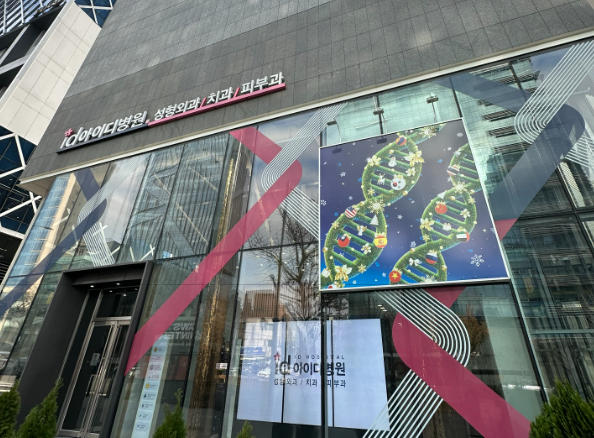
In many Korean plastics hospitals, the Korean IID hospital is almost the name of many of the American-American consumers who travel to the country.
Whether in YouTube, Little Red Book, Dcard, or Google, there is a long-term high level of search for keywords such as “Korea ID Hospital is Safe?” “Korea ID Hospital” and “Korea ID Hospital Profiles”, “Korea ID Hospital True Assessment.”
So, why is there so much discussion at Korea's ID Hospital? Is it really worth going to Korea? What are the main concerns of Hong Kong-based consumers?
The article provides a comprehensive account of the Korean ID hospital and the reasons why more and more people are now flying to Korea for medical treatment.
Why is Korea's ID hospital so popular in Asia?
When it comes to Korea's large plastic hospitals, many people think of Korea's ID at first.
The reason is simple:
It was one of the hospitals in Korea that had developed an “integrated plastic system” earlier.
Unlike the general mini-clinics, Korea ' s ID Hospital has a more biased orientation:
- Large orthopaedic facilities
- Professional branch system
- Multi-doctoral collaboration
- Face contours and bones project
In particular:
- Double jaw surgery.
- Face profile
- Right.
- Lower angle
- The hips are adjusted.
These project areas have long been discussed at the ID Hospital.
So many port-based consumers are searching:
Korea profile referral hospital
Information about the Korean IID Hospital is often available.
Why do Hong Kong-based consumers increasingly like to go to Korea for plastic surgery?
In fact, many Taiwan-Hong Kong consumers in the past had a sense of distance from Korean plastics.
People will feel:
- No language.
- Recovery trouble.
- I'm afraid of being deceived.
- I'm afraid no one will take care of her after the surgery.
In recent years, however, medical doctors have become more mature.
In particular, Korea's large hospitals began to focus on international markets:
- Chinese translation
- Chinese customer service
- Hong Kong Desk Advisory Service
- Getting on the line.
- Post-operative management
It's getting more complete.
This, coupled with the short flight time from Hong Kong to Hong Kong, has led to a growing number of people starting to think about going to Korea for plastic surgery.
What are the most popular projects at the Korean ID Hospital?
1. Face contours
This is one of the most discussed projects at the Korean IID Hospital.
The reason why many consumers go to Korea is not to “be someone else”, but to improve:
- Faceline
- The lower angle is clear.
- The cheekbone spreads.
- Face asymmetries
- Proportion of chin
The Korean contours now emphasize more:
“The sense of natural proportions”.
It's not like it's the same thing in the past.
As a result, many Hong Kong-based consumers will study the Korean profile case in particular.
2. Double mast surgery
Double mackerel surgery is one of the relatively mature projects in Korean technology.
In particular, many people exist:
- Tooth.
- I'll do it.
- Bite problem.
- Long face.
- Down the chin.
In addition to influencing the appearance,
It could actually affect chewing and biting.
Some large hospitals in Korea are:
Oral surgery + combined orthopaedic system
The development is more complete.
As a result, many Asian consumers fly particularly to Korea for advice.
3. Eye, nose and nose
Although Korea's IID Hospital is more often discussed in terms of contours, it is not possible to find out what the project is.
But it's actually one of the hot projects.
This is especially true in recent years:
- The eyelids.
- A little natural nose.
- Kindergarten eyes.
For this reason, Hong Kong-based consumers are concerned about Korean aesthetic trends.
Why do many people think that South Korea has a strong sense of nature?
This is the place where most changes have occurred in recent years.
In the past, you will feel:
Korean plastics = visible net red sense.
But now the Korean mainstream aesthetic has changed.
The current trend is:
- Alteration
- Native sense.
- Kindergarten.
- Fine sense.
The point is not:
"Let someone else know you're in shape."
They are:
"The state is delicate, but it can't be seen."
As a result, many port-based consumers will feel:
The Korean doctor's design for the overall face ratio is not the same.
It's more in line with modern Asian aesthetics.
Is it safe to go to Korea I.D. Hospital?
That's one of the biggest search problems.
In fact, no matter where they are,
It could not be “zero risk”.
In particular:
- Contour surgery
- Bones surgery.
- Allemite Project
It is in itself a larger medical act.
So it's really important.
It's not "is there a risk?"
They are:
The hospital has a complete medical system.
What is the difference between large hospitals and small clinics?
Many consumers travel to Korea and find:
The Korean plastic market is highly competitive.
Some small clinics are cheap.
But the system may be simpler.
Large hospitals usually have:
- Anesthesia team.
- CT Image System
- Special recovery room
- Do not cooperate.
- Post-operative observation system
In particular, for the contour projects,
Medical security systems are very important.
Why is it that many people do their homework before going to Korea?
Because now consumers are getting more rational.
People don't just read ads.
It's a big search:
- Real cases
- Recovery process
- Dcard share
- Reddit discussion
- YouTube records
In particular, Hong Kong-based consumers now attach the greatest importance to:
“Natural nature after the operation”.
So many people will study this:
- Close your eyes.
- Time for swollen
- Face flow.
- Do you have a sense of plastic?
Why is there a strong sense of recovery in Korea?
Korean hospitals usually stress:
Post-operative management.
Because it really affects the effect.
Not just on the day of the surgery.
It also includes:
- Swollen.
- Rehabilitation
- Diet
- Sleep.
- Recall management
Many Korean consumers will find:
Korean hospitals are in post-operative care.
It's more nuanced than I thought.
How much budget does it cost to go to Korea I.D. Hospital?
In fact, a lot of people think that:
It must be very cheap to go to Korea.
But in fact:
The price of large hospitals in Korea is usually not low.
Especially well-known doctors,
President,
The cost may be close to the port terminal.
The real difference is:
Technical maturity and case count.
Hong Kong's most common health-care problem for Hong Kong's consumers
1. What about language communication?
Most of the major hospitals in Korea currently have:
- Chinese translation
- LINE Counselling
- We believe in hospitality.
Communication has become much easier than in the past.
2. How long will Korea stay after the operation?
Depending on the project.
For example:
- Skin management: that day is fine.
- Eyelids: approximately 5-7 days
- Outline surgery: normally recommended for more than 2 weeks
3. Is South Korea really cheaper to shape?
Not necessarily.
There are many low-cost projects.
But a really mature large hospital.
Prices may not be cheap.
Many consumers really value:
- Technical experience
- Asian aesthetics
- Case stability
Why is Korean medicine increasingly like long-term maintenance?
The image of the past is:
A big change.
But now the South Korean trend has become:
Long-term precision management.
Including:
- Skin status
- Face Line
- Anti-Age Maintenance
- Minor refurbishment
The focus is on:
Maintain a “state perception”.
What do you have to pay attention to before you go to Korea?
Don't just read low-price advertising.
A lot of ads in Korea come out:
"Extra-low profile"
"Specific double eyelids"
However, projects are likely to continue on site.
It is therefore important to recognize that:
- Did the director do it himself?
- Does it contain anesthesia?
- Whether to include post-operative management
- Whether there are hidden costs
Don't blindly pursue the Red Template.
It really suits your face.
More important than copying stars.
South Korea is also increasingly emphasizing:
Personalized design.
We have to keep it for the recovery period.
In particular, the project on contours.
Real nature usually takes months.
Don't expect:
“One week of full recovery”.
Why does Korean ID Hospital continue to have discussions?
The reason is simple:
Korean consumers themselves are very competitive.
Large hospitals must maintain:
- Technical update
- Caseload
- International markets
- Medical system
As a result, Korea's large plastic hospitals have been in a highly competitive environment.
In summary: Is it worth going to Korea?
There are no absolute answers.
For some port-based consumers:
Local medicine is enough.
But if you care:
- Asian aesthetics
- Outline Design
- Fine sense of nature.
- Korean pop trends
Then go to the doctor's office.
It would be a choice for many.
And the reason why Korean IID Hospital has been discussing it for a long time is that it is not a good place to be.
Much of the reason is:
It represents the development model of Korea ' s large integrative system.
But whatever hospital you choose,
What really matters is that:
Rational assessment,
Full communication,
Risk awareness,
Choose a formula that suits you.
Because it's really good to see.
It's never about exaggerating change.
It's about making the whole state more natural and coordinated.